

Good vs Bad Surveys For Authors
The Difference in Quality and Why It Matters
It may seem simple - a list of questions you send to your readers or followers; however, not all surveys are good or even worth it. A good survey helps authors make informed and confident decisions about their writing, marketing, and brand. A bad survey, on the other hand, can lead to misleading insights, wasted time, and even poor relationships with readers. When conducting a survey it is not worth it to put something out to your audience just ‘because.’ The quality of the survey and the reason why you are conducting it matter more than making one for the sake of doing.
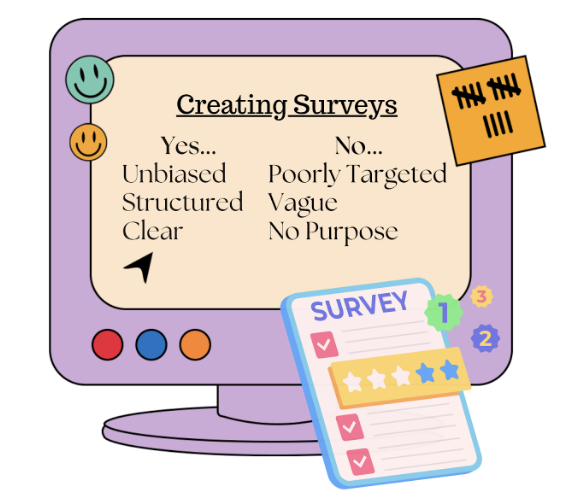
Good vs Bad
Good Surveys are tied into your goals. Your objective should be clear and defined before you draft anything up. It will be used to guide you as you formulate your questions towards what the survey is aiming to answer. Your objective can be anything from picking book titles to gauging interest in stories.
A good survey will be…
Unbiased and Specific - You want to avoid leading questions like… how much did you love my last novel? Instead… how did you feel about the pacing in my last novel?
This question asks about a specific aspect of the novel and avoids being overly general. It is also unbiased, guaging their interest without implying feelings.
Formatted Well - Having a good flow and ensuring everything is in an order where related questions are together is ideal to help participants understand the overall survey better.
Purposeful - You can use the collected data in a way that matters to your ultimate goals. It is important to be able to make decisions using what you collect.
A bad survey will be…
Confusing and Long - If it is not structured correctly, it will be hard for participants to understand what they are being asked to answer and if it is too long they may put random answers to finish or just abandon it all together.
Not Targeted - It will be sent out to everyone and anyone instead of your target audience.
Vague and Lacking Purpose - Questions that are too open ended like “what did you think” instead of a question that provides actionable insights will make it more difficult for you to understand what you need to improve on.
It ties into making sure you can explain what you want to do with the results you gather, and make sure what you are sending is worth it.
Doing It Right
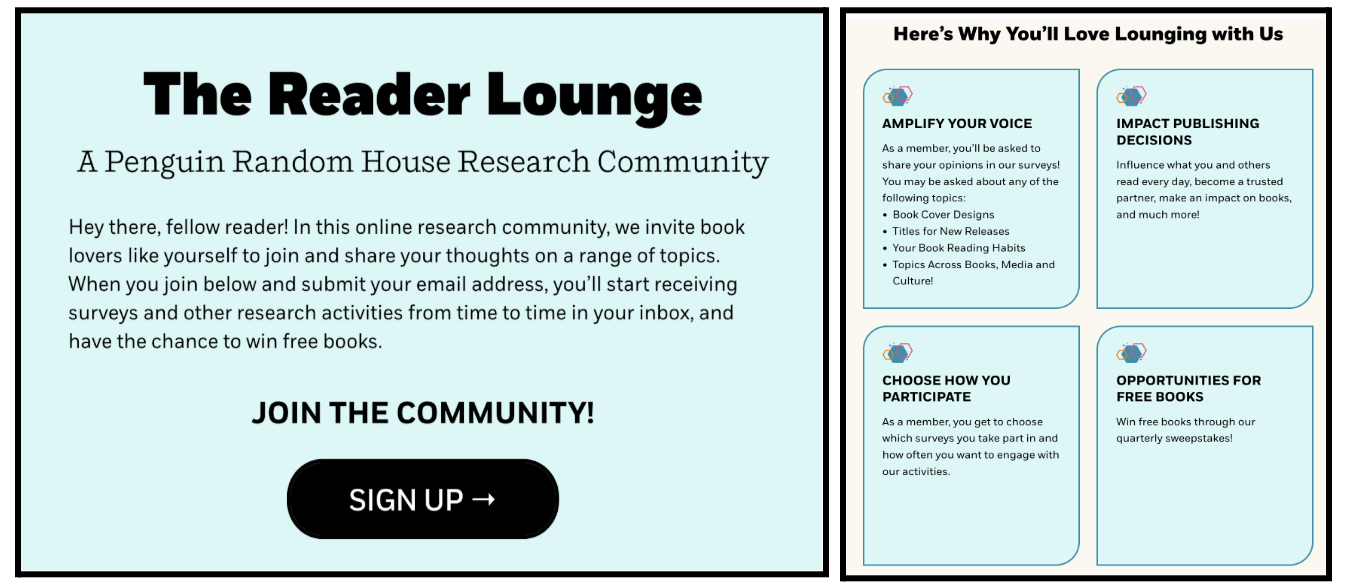
The widely recognized Penguin Random House invites their users to join the The Reader’s Lounge, which is what they promote as a research community allowing readers to influence publishing decisions. Penguin House’s team will regularly send out different surveys to readers who signed up for the lounge to gather feedback. They ask anything from cover designs, titles, pricing, and genre preferences before a book’s release.
These surveys help the marketing and editorial teams make data-backed decisions about how to position a book for its ideal audience. Penguin Random House tests multiple variations to see what resonates most with different demographic groups. The insights gathered often directly influence final designs and promotional materials. News for Authors, a blog that Penguin House releases, explains why this is an important tool for their team.
Reasons To Care and Implement
Authors should care because surveys aren’t just about collecting opinions - they’re about building relationships and direction. For an author, a good survey isn’t just a research tool; it’s part of your storytelling. A well-crafted survey will provide validation for ideas before investing time or money, offer clarity that replaces guesswork, and help you align your brand through feedback. A bad survey, in contrast, can damage trust, waste your readers’ time, and give you false confidence in flawed conclusions.
So yes - something isn’t always better than nothing.
